
Persephone & Pomegranates
I like pomegranates but not so much Greek Myths.

Persephone. Stolen and imprisoned. Forced to return to her captor every winter because she ate the food of the underworld.
It's interesting how every culture sees something a little differenly. Pomegranate is native to regions from Iran to Northern India, and high in antioxidants, vitamin C, and potassium. Its key benefits include improved heart health (lower blood pressure and cholesterol - which is good as I am participating in New Hampshire’s Ice Cream Trail - 55 ice creams from 55 of the 60 listed), reduced inflammation, improved memory , and improved joint health!
The fruit, or the seeds of the fruit, or maybe the seeds are the fruit - it's late - indicate abundance and fruitfulness with the agricultural cycle in Assyria. In Iran it's said that the pomegranate came from the spilled blood of the hero Siyâvash. It's similar in Greek stories, only it's the blood of Adonis.
From Wikipedia: “In Palestinian culture, the pomegranate symbolises fertility and is deeply embedded in folklore and traditions…
“Introduced to China during the Han dynasty (206 BC – 220 AD), the pomegranate was an emblem of fertility, and pictures of the ripe fruit with the seeds bursting forth were hung in homes. In some Hindu traditions, the pomegranate symbolises prosperity and fertility, and is associated with both Bhumi and Ganesha.”
I saw them (pomegranates) in the store the other day and have never opened one up. I have been out and had them in salads and drank its juice, but not ‘started from scratch' as it were.
Today I played with my camera and the pomegranate.
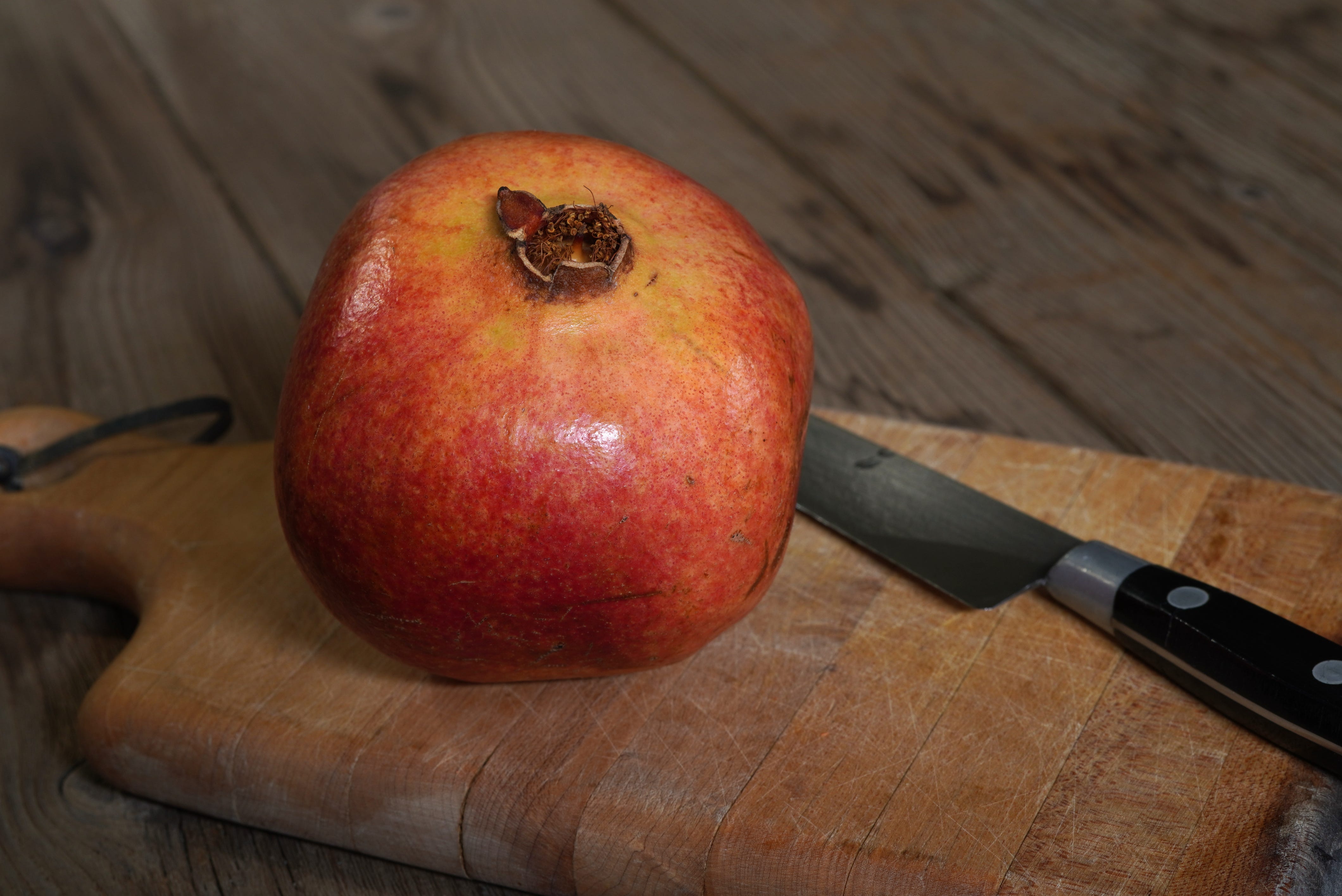
So, the story (very briefly): Persephone was young, wandered away from her nymph companions and got distracted by the recently appeared Narcissus flower, you know, the daffodil. As it happens, up pops Hades from the underworld, sees Persephone, snatches her and takes her back to his realm to make her his wife.
She wants to go back to her mother but he refuses to let her go.
Who's her mother? Demeter, and when she finds her daughter missing, she is pissed! Being the goddess of agriculture and crops, when she goes in search of Persephone, everything starts to die. Her grief is huge, as is any parent who grieves for a child.
Demeter hooks up with Hekate and together they seek out Helios, the sun god who saw the whole thing. Demeter goes to Zeus and demands her daughter back, but he says Hades would make a great husband. Demeter is not thrilled at all. Hades abducted her daughter. (I’m totally with Demeter. It's stories like this that are the reason I very much dislike Greek myths.)
Demeter leaves Olympus to live with mortals and hooks up with this wonderful family whose daughter, Iambe, and the bawdy nurse Baubo restores her spirits, as she tends a baby. The gods want her back, especially Zeus, but she refuses.
A year goes by and crops are failing, Zeus is worried humans will die (maybe his one and only time he shows actual compassion) and so orders Hades to return Persephone to her mother. Hades, ever the sneak and cheat, persuades Persephone to eat four teeny, tiny pomegranate seeds, as she is hungry, before taking her back to her mother.
When Persphone and Hades meet with Demeter, she is overjoyed. But Hades says “Nah-ah. She ate food in the underworld, she's mine.”
Demeter goes ballistic and Zeus, a little intimidated by this Mama Bear, mediates that for four months of every year, a month for each seed, Persephone must return to Hades. Total boy’s club rules.
Demeter grudgingly agrees because some Persephone is better than no Persephone! Hades also agrees for the same reason. Why is it the kids are always the ones to suffer?
Demeter teaches new rituals in Eleusis (the Eleusinian Mysteries) and the plants grow back (except for four months of the year, when her daughter is taken back to the Underworld where she becomes queen).
Pft. Greek myths.
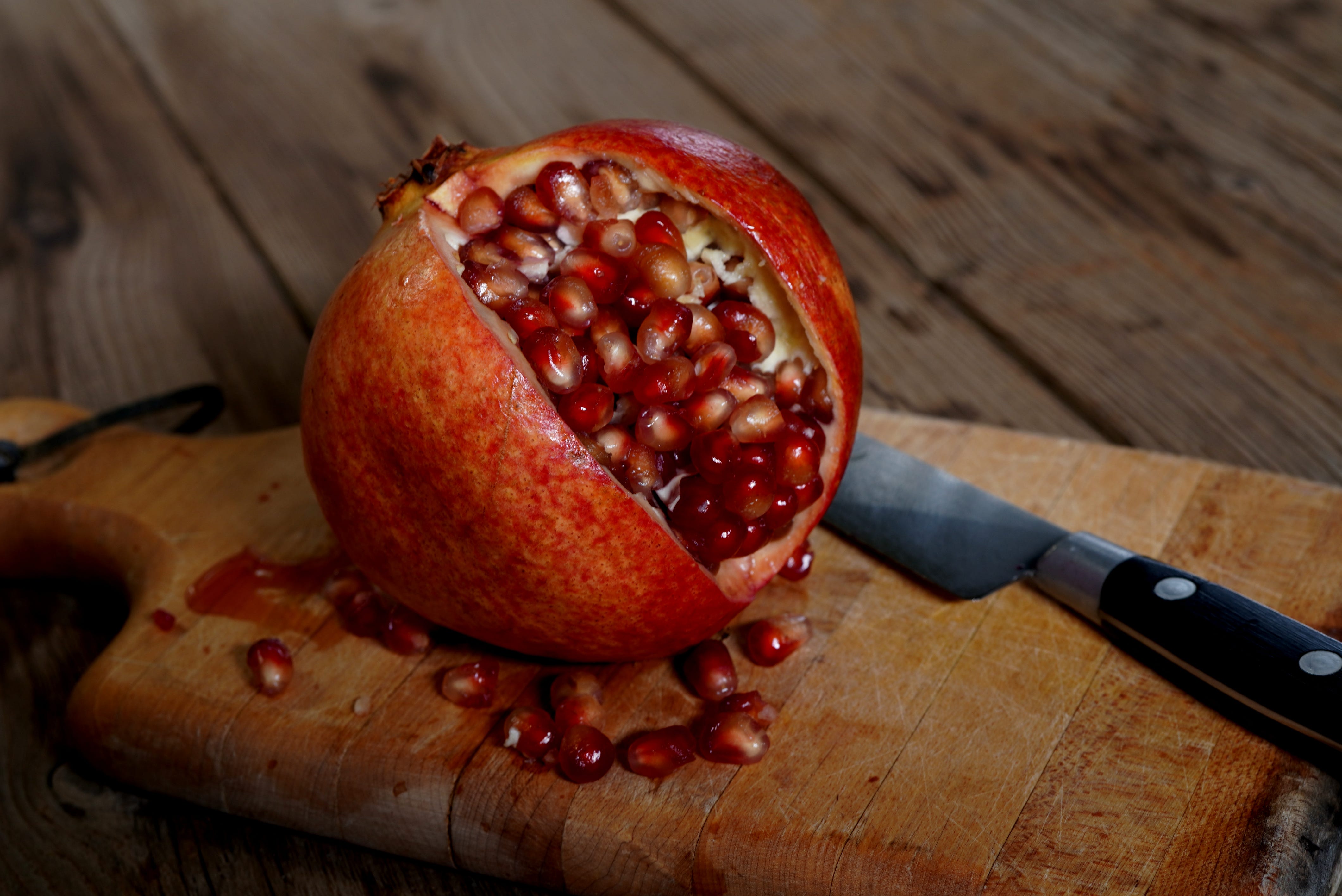
So these seeds which caused winter, so the story goes, are quite like red corn in appearance, but instead of being readily available under the leaves attached to a cob, are buried in the flesh of the fruit. You kind of have to pull the pomegranate apart, opening it out to get to the fruit inside. They are quite yummy, and, at least the one I had, a tiny bit crunchy. It would have been easy to eat the whole lot, but I have saved some for breakfast!
I hope you got something from the story, which is, of course, much longer than the summary above, and enjoyed the photos.
All the best! Be safe out there.
Simon
I appreciated your retelling. Nicely done...
I've had pomegranates before. I'd been so stoked to try one...then quickly realized that eating it takes a lot of time.